




WHY?
Every time you put on a helmet, you create a warm, dark, humid microclimate.
Your scalp heats up quickly. Sweat builds. Airflow is limited. The lining absorbs moisture and holds it close to your skin. From a microbiology perspective, that environment is ideal.
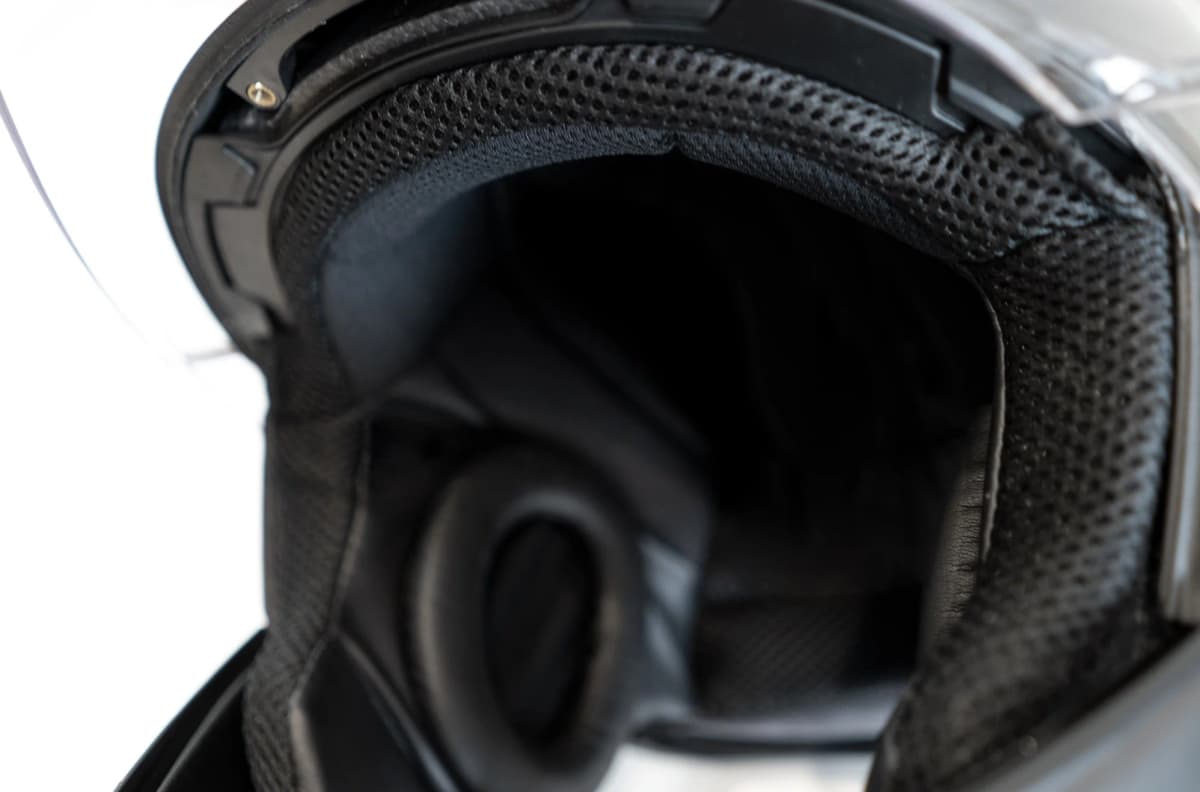
The real biological action
The lining sits against your head.
It absorbs everything.
Most people think of helmets as hard shells. The real problem is inside: the foam and fabric lining that absorbs everything your body produces during use.
That combination becomes fuel for microbial growth. Left alone, the lining becomes a reservoir.
The inside of a worn helmet
Moisture + Time = Microbial Growth
Most bacteria thrive between 20 and 40°C. Add humidity from sweat and poor ventilation and you have conditions that support rapid microbial multiplication. Foam and fabric padding are porous, trapping moisture and providing surface area for organisms to cling to and grow.
Fresh sweat is mostly water and salt, and it does not smell. Odour develops when bacteria break down sweat into volatile compounds. The main culprits: Staphylococcus and Corynebacterium species, both common on human skin.
Over time, this leads to
What builds up inside your helmet
Persistent odour
An established microbial community embedded in fabric and foam. Surface sprays mask it temporarily. They don't remove it.
Discolouration
Lining staining caused by accumulated organic material and microbial activity over months of use.
Skin irritation
Repeated exposure to high bacterial loads increases the chance of irritation or infection, especially for sensitive skin, eczema, or minor scalp abrasions.
Material degradation
Persistent moisture and microbial activity breaks down foam and fabric faster, shortening the life of the lining.
You wouldn't wear the same unwashed hat every day for a year.
Yet many people effectively do that with their helmet lining. Most wipe the shell. Some spray the exterior. Very few remove liners, wash them thoroughly, dry them correctly, and disinfect them at a level that meaningfully reduces bacteria.
Odour Is a Signal
Persistent odour indicates an established microbial community embedded in the fabric and foam. Surface sprays may mask smell temporarily, but without proper treatment, bacteria remain in the deeper layers.
True hygiene requires:
- Effective antimicrobial action
- Penetration into porous materials
- Adequate drying to prevent regrowth
Anything less is cosmetic.

The hard shell protects you from impact. The lining needs protection from biology.
Your helmet protects your brain. The lining sits directly against your scalp and absorbs everything your body produces during use. If the inside is not cleaned and disinfected regularly, bacteria continue to accumulate, odour worsens, skin irritation risk increases, and the material degrades faster.
Regular internal cleaning breaks the cycle. It reduces bacterial load, removes built-up organic material, and restores the helmet to a more hygienic state.
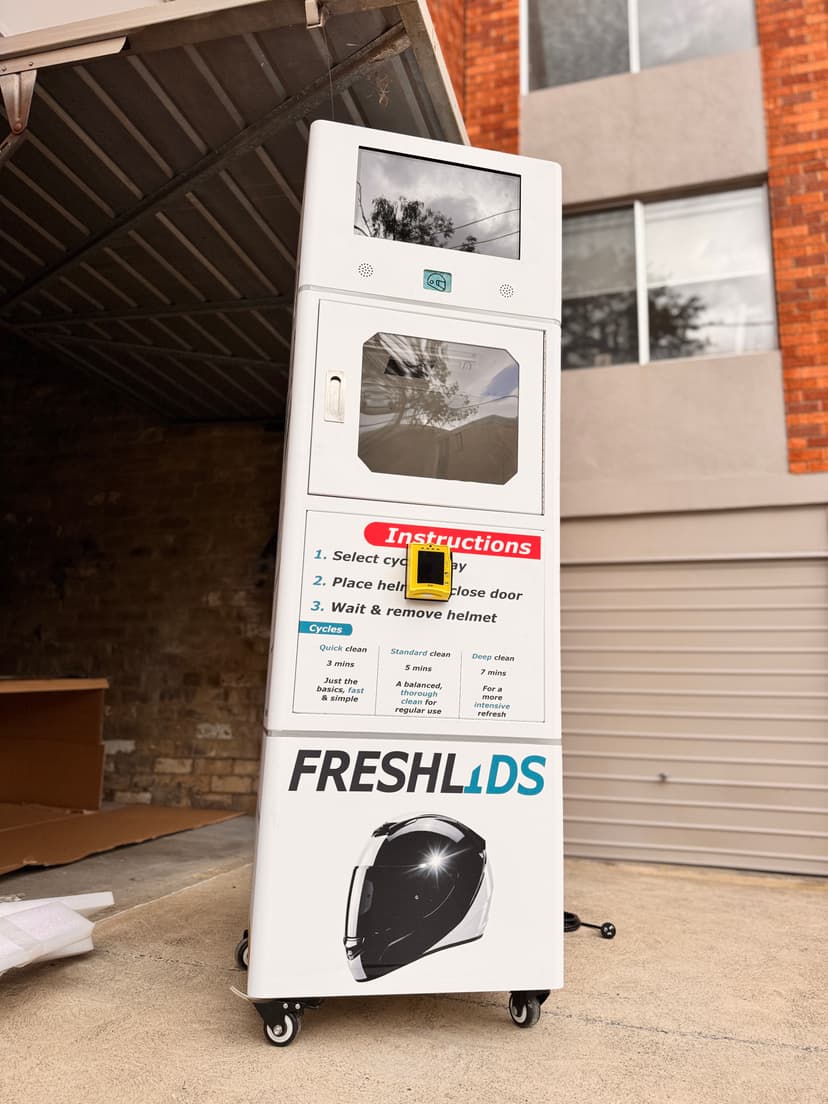
The answer
FreshLids exists to fix that.
And that lining is the part that almost never gets properly cleaned.
See how it worksBring FreshLids to YOUR VENUE
Leave your email and we'll get in touch to discuss placement and options.